Wet kitchen vs dry kitchen: which does your home need?
How wet and dry kitchens differ, which suits your cooking, and how to plan one or both in a Sabah condo or landed home, including hoods for wok cooking.
Short answer
A wet kitchen handles heavy cooking: wok frying, boiling, washing and anything that makes smoke, oil or mess. A dry kitchen is for light prep, breakfast, drinks and entertaining, and is often open to the living area. Many Sabah homes use both. If you only have space for one, plan strong ventilation and durable surfaces.
What each kitchen is for
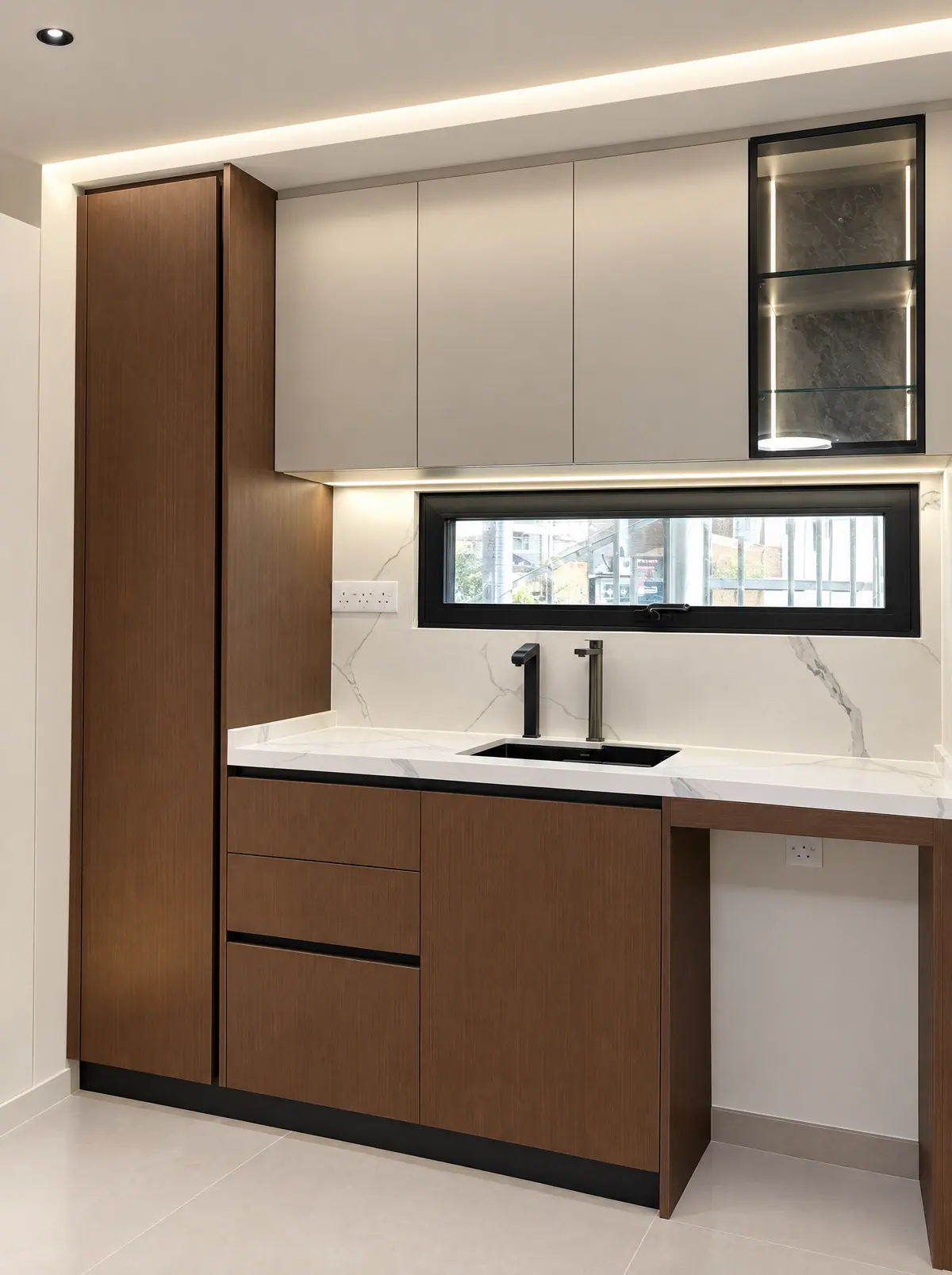
The wet and dry kitchen split is common in Malaysian homes because of how we cook. Stir-frying, deep-frying and slow-simmered soups create heat, steam, oil and strong smells. Keeping that work in a separate, well-ventilated space protects the rest of the home.
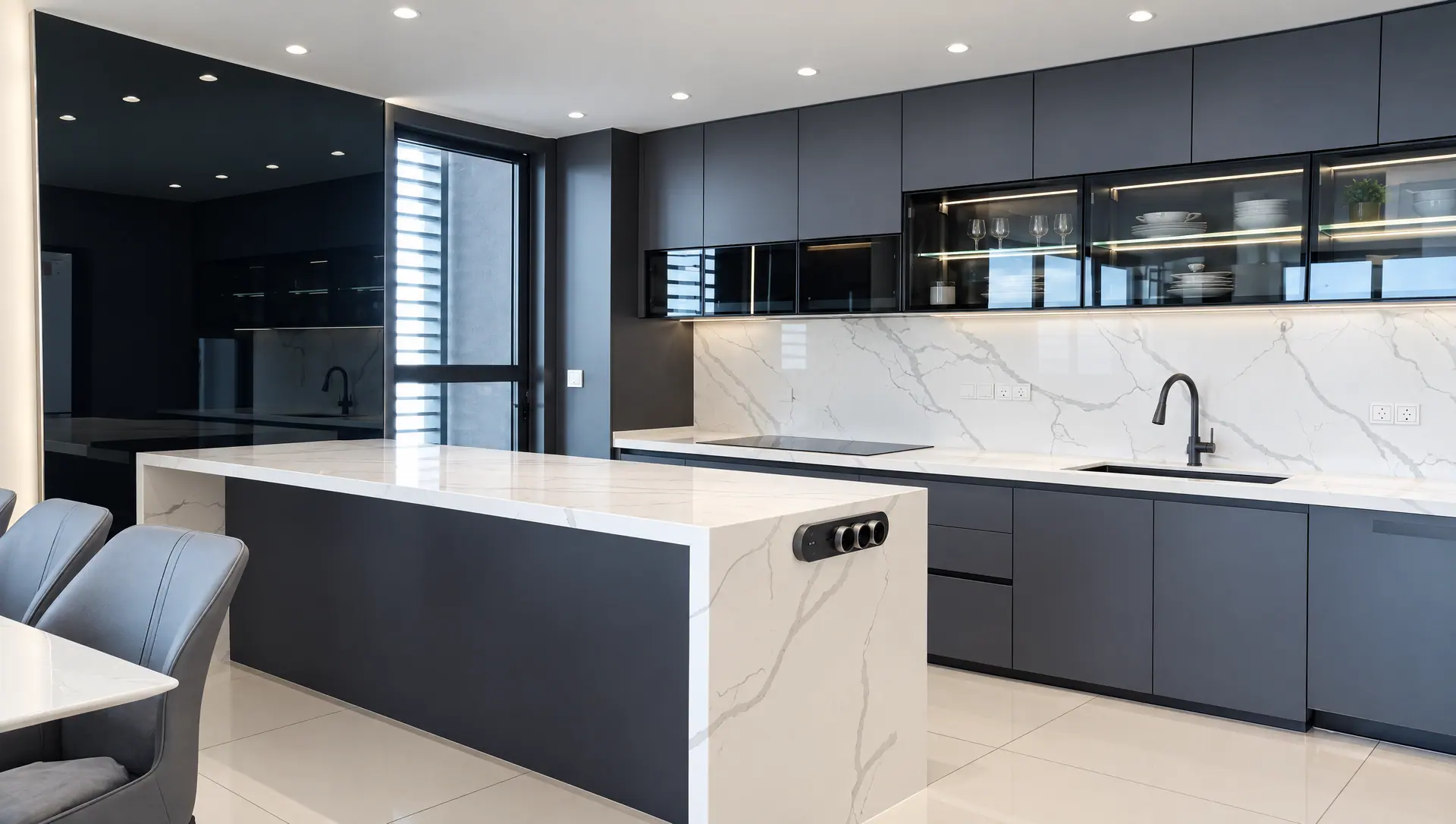
A dry kitchen is the clean, presentable side. It is where you make coffee, heat food, prepare salads and fruit, bake, and gather with family or guests. It is often the kitchen people see, so it tends to carry the nicer finishes.
The wet kitchen: built to work hard
A wet kitchen should prioritise durability, ventilation and easy cleaning over looks. Surfaces will meet splashes of oil and water every day.
- A powerful hood matched to the hob, with a sensible ducting route
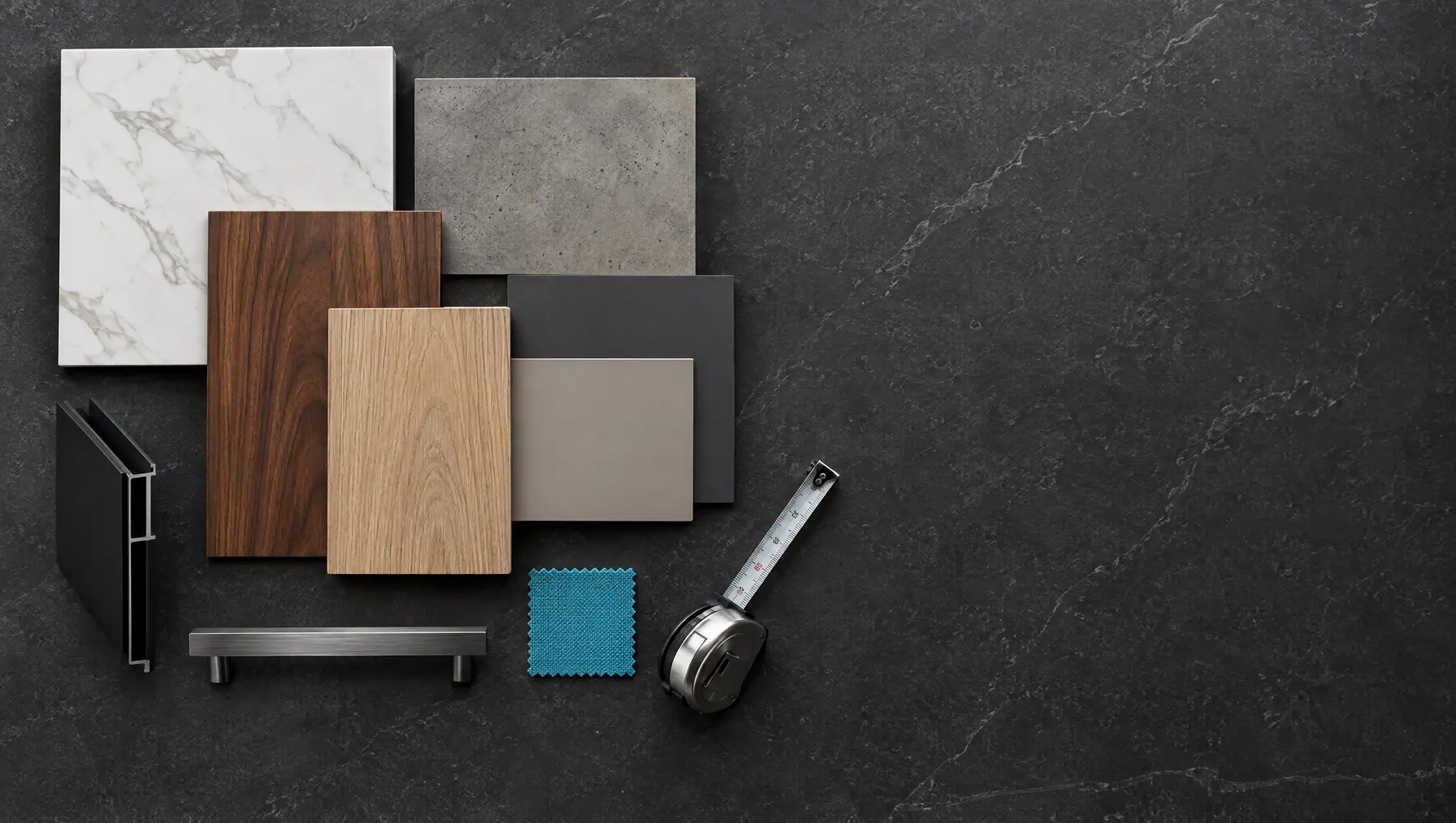
- Worktops and backsplashes that resist heat and stains and wipe clean
- Cabinet boards and edges suited to damp, greasy conditions
- A deep sink with space for large pots and woks
- Storage for woks, pots, sauces and dry goods close to the hob
- Good lighting over the work area
The dry kitchen: the sociable side
Because the dry kitchen sees less heavy cooking, you have more freedom with materials and layout. Islands, breakfast counters, open shelving, display cabinets and softer finishes all work well here.
Many families put the fridge, oven, microwave, coffee machine and a small sink in the dry kitchen, and keep the gas hob and heavy washing in the wet kitchen. Think about where you actually stand each morning and plan the dry kitchen around that routine.
Do you need both?
Ask yourself how often you cook with a wok or deep-fry, how many people cook at home, and whether your kitchen opens to the living room. If heavy cooking happens daily and the kitchen is open plan, a separate wet kitchen is usually worth it.
If you mostly cook light meals, eat out often, or live in a compact condo, one well-planned kitchen may be enough. The key is ventilation that matches your cooking style.
Condo vs landed homes
Many condominiums have a small enclosed kitchen or a yard area that can work as a wet kitchen, with an open dry kitchen near the living room. Ducting routes and what can be changed are often limited by the building, so check with management before planning big changes.
Landed homes often have more room for a separate wet kitchen at the back of the house, sometimes opening to a yard. That makes ventilation easier, but it is still worth planning plumbing, drainage and power points properly.
Hoods and hobs for wok cooking
For Asian home cooking, the hood is the most important appliance in the wet kitchen. Hood type, suction, the size of the capture area and the ducting route all affect how well smoke and oil are removed.
Cabchen is an authorised Fotile brand store, so Fotile hoods and hobs can be planned into the cabinetry from the start rather than squeezed in afterwards. The right combination depends on your cooking style and kitchen layout, which Cabchen can advise on during the site visit.
One kitchen that does both jobs
If space allows only one kitchen, you can still borrow ideas from the split. Keep the hob zone compact with durable surfaces and a strong hood, put appliances that create steam under good extraction, and give the side facing the living area a cleaner, more furniture-like finish.
Sliding glass doors or a partial partition can also contain smells while keeping the space feeling open.
Questions to decide before your site visit
Having rough answers to these makes the design conversation faster and more useful.
- How often do you wok-fry or deep-fry each week?
- Who cooks, and do two people cook at the same time?
- Which appliances do you already own and want to keep?
- Do you entertain guests in or near the kitchen?
- Where would you like the fridge, rice cooker and water dispenser?
- Are there condo rules about moving plumbing or ducting?
Common questions